Showing posts with label government. Show all posts

Monday, March 19, 2018

Fifth Domain Electricity

There's been more than a few news articles this past week about Facebook and Cambridge Analytica and how user data was used to (maybe (almost certainly)) swing the 2016 election.  Enough coverage that I'm not going to talk about it here.  Suffice to say that anything you put on social media can and will be used in ways that you may not intend.  Including rambling blog posts.

Instead, I want to discuss another item that is not getting as much traction, but may be much more serious.  It's this opinion piece from The Hill that warns of Russia's ability to attack our infrastructure through the internet.  It sounds like something from a spy thriller and would be easy to dismiss if they had not already done it once.


Monday, October 23, 2017

Un-National Security ID

Last week, I discussed some thoughts on personal identification, specifically as it related to credit ratings and the Equifax breach.  However, one of the things that I did not discuss is why something like this is not already in place.

After all, many other countries have National ID programs that allow them to segregate citizens from non-citizens.  To understand who is entitled to the rights set forth in each country's governing documents and laws.  Also, who should be paying taxes.  From a bureaucratic stand point, having a strong, trustworthy National ID system only makes sense.

Then why doesn't the United States, the most rootin'-ist, tootin'-ist country in the whole dang world, have something like this?   Read on, intrepid ponderer!


Monday, May 22, 2017

The Techno Contract

A couple of weeks ago, I ran into the term "Techno-Feudalism," bare and all but devoid of context.  It was in this Reddit post on /r/Futurology.  Like all red blooded Reddit browsers, I did not actually read the post, just the headline.  But the term stuck with me.  What is it? What do I think it is and what is it actually?


Monday, April 10, 2017

Affirmative Automation

This week, I'm going to continue ignoring the repeal of Net Neutrality.  Instead I want to return to the concept of workplace automation.

Human Quotas


In particular, this article from The Guardian, US Edition, "Rise of robotics will upend laws and lead to human job quotas, study says."  The article in about a report from the International Bar Association on the rise of the robot workforce.  Despite the headline, the article spends little time talking about human quotas, instead documenting the rise of workplace automation.  Which is something anyone paying any kind of attention already knew about.

Despite the disparity between the headline and the content, the article does mention that the report does suggest that governments may attempt to regulate the job market, requiring that employers hire some number of humans.  In general, I think that this would be a colossal mistake.


Mismatched


(We're going to set aside the issues of building and maintaining automation for this article.  They are short term jobs that will also ultimately die to automation.  Eventually the robots will be building and maintaining themselves.)

The problem is that humans, as non-specialized tool users, will never be able to compete with task specific robots.  Those will always be able to do the task for which they are designed faster, more reliably and more cheaply than something like the jack-of-all-trades design that is the human body.

As that is the case, requiring humans to do similar work to the robots right next to them will reduce the competitive advantage of the company/country that enacts these quotas.  Other jurisdictions that allow their employers to go 'full auto' will have companies that can produce the same product cheaper and with higher quality, undercutting the quota companies and driving them out of business.  And then where will the humans work?

Why 'Work'


For me, the problem is the word 'Work'.  For the purposes of this rant, I'm going to define 'work' as the 'trade of free time for currency'.  Our current economy, at least in most developed economies, is based on the need for the population to work so that they can:

  1. earn money so that they can 
  2. spend money so that
  3. other people can work so that they can
  4. buy the things that the first people make/do.

We are all trading our free time so that we can buy things that other people make by trading their free time so that they can buy the things that we make.  This is the 'Business Cycle'.

(courtesy of the BBC)

But what if our "Needs & wants' were met without work because automation?  What would we do then?  That is the question that a fully automated work force starts to ask.


The Real Question


Work is supposed to reward effort with access to more and better resources through the middle many of currency.  We are supposed to be a meritocracy (a subject for debate).  But if there is no work to reward, then how do we know who is pulling their weight and who is just sitting around playing video games all day long?

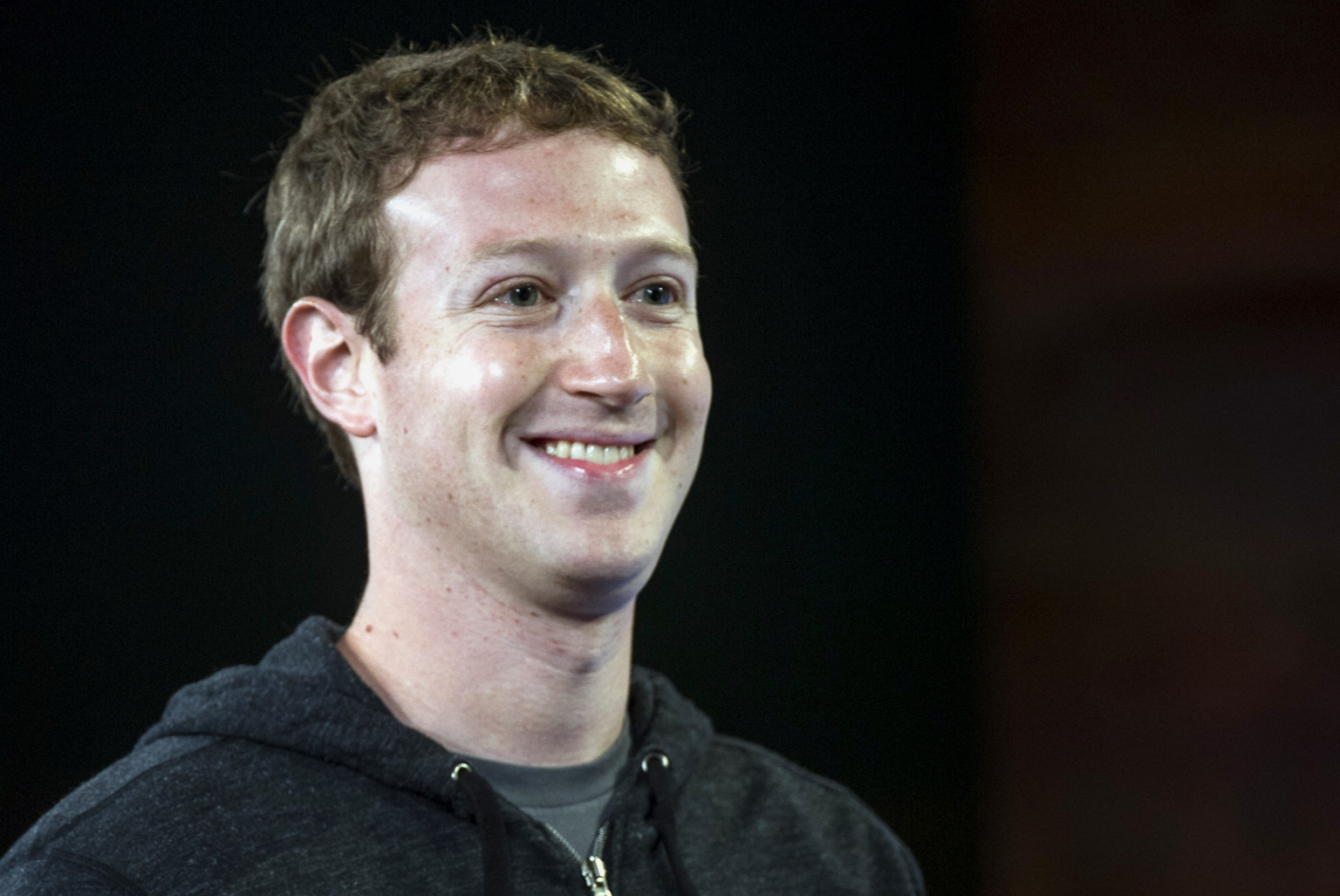
This is the question that needs to be debated in the halls of power: how do we reward actions that our society deems meritorious?  It does not need to be money.  It could be Facebook 'Likes' (not to give the great and glorious Zuch any ideas to expand his already growing FB Economy).  It could be YouTube subscriptions or something like gaming achievements.  Maybe these could be used for access to higher tier goods and services... but that just swaps dollars and pounds for likes and achievements.


What Are You Going To Do With Your Life?


Maybe the real issue is not how we reward effort or creativity, but that we all feel that things like 'effort' and 'reward' need to exist.  I realize that competitiveness is baked into the human psyche after millions of years of evolution, but it may be time to start working those out of our minds.  Instead of doing things because there is an external reward, we should be doing things because the doing of those things is reward enough.  It is a nice thought.

In reality, maybe the first step is to actively start automating government.  When the lawmakers start to see their lives disrupted, something will happen.  Maybe quotas, maybe Universal Basic Income, maybe something else, but it will be a step towards a post-work human society.

Monday, March 13, 2017

WikiLeaks Distract-O-Rama

After two weeks of speculative writing on UI/UX for direct-to-brain interfaces, it's time to come back to what's happening in the present.  And it is so much fun!

The big news this last week in the on-line world and connected devices was the Vault 7 release from WikiLeaks.  Over 8,000 pages of stuff, much of it detailing the tools that the CIA used to spy on people.  Many of those tools targeted smartphones, smart cars and smart TVs; not the laptops and servers that are the staples of Hollywood Cyber Hacking.  

(Courtesy USA Network via the kind soul who posted it to YouTube)

In other words, the CIA has been targeting the Internet of Things.  According to WikiLeaks.  Who may or may not be in cahoots with Russia or the Trump Administration or not the Trump Administration. Or maybe Brexit?

Putting aside the loyalties of an institution who's primary aim is to "... give asylum to these [persecuted] documents, we analyze them, we promote them and we obtain more,” what we need to know is whether or not the CIA is spying on us through our TVs.  Are they?  Won't someone please tell me so I can enjoy my mindless drivel in peace?

Most experts seem to think that the short answer is "no, the CIA is not spying on you."  The longer answer adds a bunch of addendum: if you are an American citizen living in the USA, then it is illegal of the CIA to spy on you.  Because the legality of the CIA's operations is something that the American people have learned to trust, right?  Right?

If you are not an American or an American not in America, the the CIA might have used some of these tool to find out if you are doing things counter to the interests of America (sentence needs more America.)  Otherwise, it's not the CIA you need to worry about.  It's the NSA and the FBI and the ATF and the HSA, maybe the ICE or the FCC or the FTA (probably not FTD, but don't count them out).  Who knows how many of these 'tools' have been shared?


BUT THAT'S NOT REALLY THE POINT


All of this brouhaha about WikiLeaks may be true (most likely), but why now?  They have been promoting Vault 7 for a while.  Why release it now?  From what are we being distracted?  Here's some of the things that are happening while we all stare at Assange's 'sexy' face.
WikiLeaks can serve a purpose.  They can expose things to the public that are in the public's best interest to know.  But they can also do those things in such a manner that is NOT in the public's best interest.  This may be one.

We all need to keep an eye on everything that's going on and not be distracted by one story.

Monday, November 14, 2016

The Internet of Policy

So That Happened


With the completely mis-forecasted win by Donald Trump in the US Presidential Race this last week, there is going to be changes in policy and direction that will affect the Internet of Things on all three fronts: governmental, enterprise and consumer.  The big question is what those changes will be and that is not easy to predict.

On one hand, Mr. Trump has painted himself as a business man.  From that perspective, automation is a good thing.  It cuts long term costs and improves quality.  On another hand, he wants to bring jobs back to this country and automation is not good for that.

On a third hand, Mr. Trump is also not a fan of anyone who disagrees with him.  That leads to the potential for a surveillance society and an increase in the need for the Internet of Things.  On the other (fourth?) hand, he has threatened to 'unplug the Internet' if necessary, a crucial component to any distributed automation.

All of those Kali-esque hands lead me to one conclusion:

I have no freakin' clue how this will affect anything
(Courtesy of FunkyJunk.com)

Let Me Help


So, instead of trying to predict what his Trumpness will do and how it will affect this emerging technological area, I'd like to make some recommendations: what I would do if I were in his shoes.

First, I would issue a statement that recognizes that the Internet of Things is not going away.  If the government bans all of that stuff, from wireless cameras to Nest thermostats to automated light bulbs, they will simply go underground.  The convenience and such is too much to allow stuffing the genie back into the bottle.  In many ways, it is like the rise of the Smartphone: once you have it, you're not going to willingly give it up.  Recognition does not mean that it should be allowed to happen un-regulated.  That is not in the public interest.

Security Regulation


And that first regulation needs to focus on how secure these devices are.  Something similar to FCC approval for radio devices, but is more focused on the preventing hacking and IoT botnets.  Does the device require the user to change the default password before it can be used?  Does it conform to the latest Wi-Fi security standards?  Can it detect basic attacks and respond?  What is the process for upgrading the firmware to handle new types of attacks?  This would have to be a oft reviewed set of standards as security needs change quickly.  Underwriter's Laboratories (UL) does have a certification for IoT devices, but it appears to be more about making money for them and less about protecting the consumer.


IP Freely


Next, I would push for a stronger, mandatory switch for all IoT devices to be IPv6 compliant.  The good old 192.168.x.x and 10.0.x.x that most home users use as their only subnet only allow for so many connections.  IoT devices require more.  IPv6 is really more about the connection from the router out to the rest of the world and not from the device to the router, but with the rise of the cloud connection/control of these devices, forcing the wider range allowed by IPv6 would get everyone off their asses and start using the new protocol.

Cloud Control


The final part of my plan would be to have some regulation around the corporate clouds to which most of these devices connect.  Right now, many (most) IoT consumer devices require that the device connect to specific servers run by the manufacturer.  What protections are in place to prevent these corporations from spying on their customers?  Right now, we all click through an unread T&C document that probably waves our rights to privacy with these devices.  A new boilerplate set of terms needs to be created and mandated for connected devices sold in this country.


Reality Check


Despite the opaque nature of the future, I have low expectations that any of those things will happen. As a business man, the Trumpster is more likely to reduce regulation than increase it.  To let the Invisible Hand of capitalism decide what products are best.  With that in mind, make sure that you protect yourself: update firmwares often, change passwords often and keep your virus protection up to date.

Monday, August 29, 2016

Internet of Philosophy: Municipal


Intro to a Three Parter


Today, I'm going to start a three piece run on three different areas/levels/implementation spaces for the Internet of Things: Municipal, Commercial/Industrial, and Consumer.  For each, I plan on discussing the basics, pros and cons, and a potential guiding philosophy (hence the title) that may help those that build systems within each of these spaces.

I'm doing this because the Internet of Things is too all-encompassing a term.  Too often I read articles that appear to be about smart homes but are really about enterprise implementations.  As I filter my IoT reading for smart homes, it got me wondering how many articles with enterprise or government sounding titles were really about consumer level IoT.  There are no clear cut boundaries and, in the long term, there should not be as everything gets integrated.  But for the nonce (TIL of brit-slang nonce), these systems aren't connected or really working together in any way.

This separation is due mostly to funding.  Is the taxpayer, the stock holders or the private citizen paying for it?  Occasionally, it's all three as is the case with the slow, grinding move towards a smart power grid.  Usually, though, we pay for IoT systems as a member of only one of those groups.